



Blog
How Long Do Solar Street Lights Last? A Deep Dive into Lifespan Factors

How Long Do Solar Street Lights Last? A Deep Dive into Lifespan Factors
When investing in solar street lighting for municipal, commercial, or rural projects, the return on investment (ROI) hinges on one critical question: How long will these lights actually last? On average, a high-quality solar street light system is designed to operate effectively for 5 to 10 years. However, its overall lifespan is determined by the weakest link in the system, the environment it operates in, and how well it is designed.
Here is a comprehensive breakdown of the factors that affect the lifespan of solar street lights.
1. Quality of Core Components
The longevity of a solar street light is primarily dictated by the lifespan of its main hardware components:
- The Battery (The Bottleneck): The battery is the heart of the system. Lithium Iron Phosphate (LiFePO4) batteries are the industry gold standard, offering 2,000 to 3,000+ charge cycles (roughly 5 to 8 years) and excellent thermal stability. Lead-acid batteries typically last only 1.5 to 3 years.
- The Solar Panel: High-quality monocrystalline panels can last 20 to 25 years, with a natural degradation rate of about 0.5% per year.
- The LED Light Source: Modern LED chips are incredibly resilient, often rated for 50,000 to 100,000 hours of use.
2. Environmental & Climatic Conditions
A solar street light installed in a mild climate will age differently than one installed in a harsh environment.
- Extreme Heat: Constant exposure to extreme heat can accelerate chemical degradation inside the battery. High-temperature-resistant LiFePO4 batteries are essential for projects in tropical or sub-Saharan climates like Nigeria or Ghana.
- Dust and Sandstorms: In arid or dusty regions, accumulated dust creates a “shading effect” that drastically reduces charging efficiency.
- Humidity and Salinity: For coastal projects, salt spray can cause metal components to rust and wire connections to corrode.
3. Structural Design and Security
How the light is built is just as important as what is inside it.
- Integrated (All-in-One) Design: All-in-one solar street lights encase the panel, battery, LED, and controller into a single, compact aluminum housing. This protects sensitive internal wiring from water, dust, and extreme weather much better than traditional split-type designs.
- Anti-Theft Features: A street light’s lifespan drops to zero if its battery or panel is stolen. Robust outer molds and customized anti-theft structural designs act as a physical deterrent, ensuring the light remains securely on the pole.
4. Intelligent Control Systems
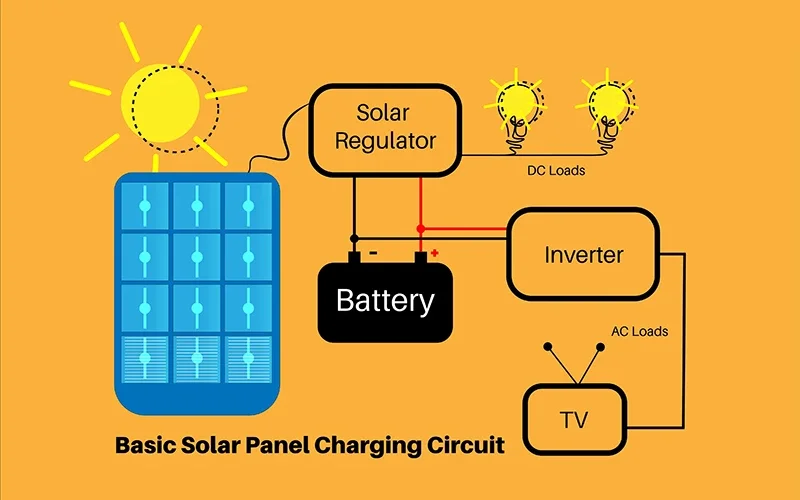
The Solar Charge Controller is the brain of the operation. A smart controller extends the life of the battery by preventing overcharging and deep discharging.
Utilizing motion sensors (PIR/Microwave) and time-based dimming reduces power output when no one is around, thereby reducing the daily strain on the battery and extending its lifecycle.
5. Maintenance Practices
While solar lights are low-maintenance, regular cleaning of the solar panels every few months ensures the battery receives a full charge cycle every day, keeping the system healthy for years.
Summary: To maximize the lifespan of a solar street lighting project, buyers should prioritize systems with LiFePO4 batteries, highly integrated anti-theft designs, and smart controllers.