



Blog
How Many Street Lights Per Km?

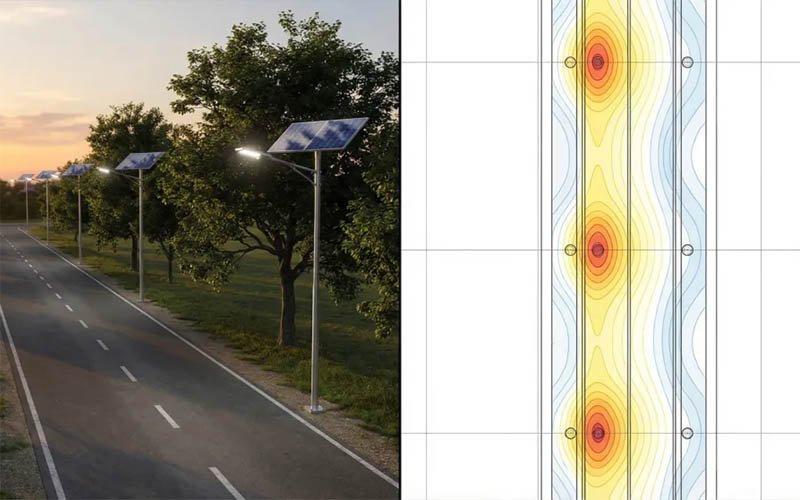
How many street lights are needed per kilometer?
The answer is not fixed. It depends on several key factors such as:
-
Pole height
-
Road width
-
Lighting requirements
-
Type of light (solar or grid-powered)
Choosing the wrong spacing can lead to dark spots, wasted budget, or poor lighting performance.
Here’s a general guideline based on common projects:
| Pole Height | Spacing Between Poles | Lights Per Km |
|---|---|---|
| 6m | 20–25 meters | 40–50 lights |
| 8m | 25–35 meters | 28–40 lights |
| 10m | 30–40 meters | 25–33 lights |
Simple rule: Higher pole = wider spacing = fewer lights per km
What Determines Street Light Spacing?
1️⃣ Pole Height (Most Important Factor)
The taller the pole, the wider the light coverage.
If you are not sure which height to use, read: 6m vs 8m vs 10m Street Light Pole
(This will help you avoid the most common design mistake.)
2️⃣ Road Width
-
Narrow roads (4–6m) → closer spacing
-
Medium roads (6–10m) → standard spacing
-
Wide roads (10m+) → wider spacing
Wider roads require either:
-
Higher poles
-
Or more lights
3️⃣ Lighting Standard (Lux Requirement)
Different projects require different brightness levels:
-
Rural roads → lower lux → fewer lights
-
Urban roads → medium lux → standard spacing
-
Highways → high lux → more powerful system
4️⃣ Type of Lighting System
For solar street lights, spacing becomes even more critical because:
-
Battery capacity is limited
-
Power output is not constant
-
Poor design leads to dim lighting over time
For a complete understanding of height and system design, check our street light pole height guide
Common Mistakes in Street Light Planning
Mistake 1: Spacing Too Wide
-
Creates dark areas
-
Reduces safety
-
Causes customer complaints
Mistake 2: Spacing Too Close
-
Increases cost unnecessarily
-
Wastes energy
-
Over-designs the project
Mistake 3: Ignoring Pole Height
Many buyers calculate spacing without considering pole height.
This leads to:
-
Uneven lighting
-
Poor performance
Real Project Example
Rural Road Project (Africa)
-
Road width: 6 meters
-
Pole height: 8 meters
-
Spacing: 30 meters
Result:
-
~33 lights per km
-
Balanced cost and performance
-
Stable operation after 2+ years
Recommended Spacing by Application
🏡 Residential Roads
-
Pole: 6–8m
-
Spacing: 20–30m
-
Lights per km: 35–50
🏙️ Urban Roads
-
Pole: 8–10m
-
Spacing: 25–35m
-
Lights per km: 28–40
🛣️ Highways
-
Pole: 10m+
-
Spacing: 30–40m
-
Lights per km: 25–33
🔧 Pro Tips for Solar Street Light Projects
If you want long-term performance:
-
Match pole height with spacing
-
Use high-quality batteries (avoid cheap systems)
-
Optimize panel size
-
Avoid “fake watt” products
👉 A good design can reduce total cost by 20–30%
✅ Conclusion
So, how many street lights per kilometer?
👉 It depends on your design, but:
-
6m pole → 40–50 lights/km
-
8m pole → 28–40 lights/km
-
10m pole → 25–33 lights/km
👉 Final rule: