



Blog
Solar Lights for Home – Guide (2026)

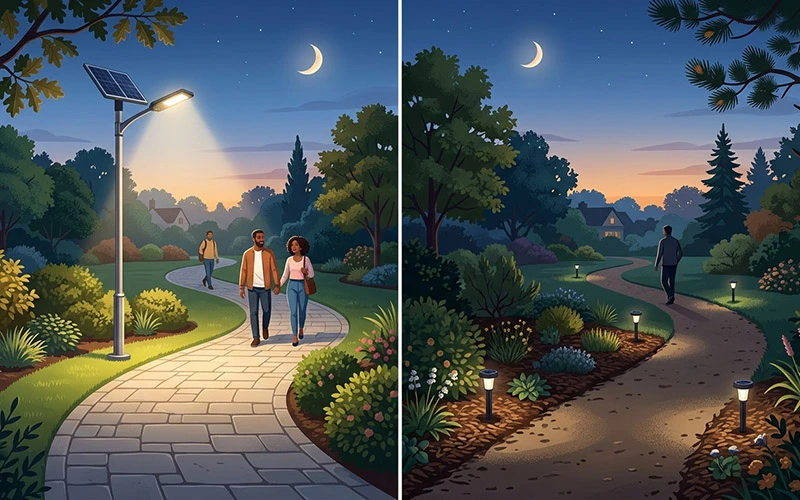
— and residential use is the fastest-growing segment driving that surge. Solar lights for home
The concept is deceptively simple. A small photovoltaic (PV) cell — typically monocrystalline or polycrystalline silicon — absorbs photons from sunlight and converts them into direct current. That current flows into a rechargeable battery, usually a 3.2V lithium iron phosphate (LiFePO4) or a 1.2V NiMH cell, where it sits until dusk triggers a built-in photoresistor. Once ambient light drops below a set threshold, the circuit flips and the stored energy powers an LED array that can run for 8–12 hours on a full charge.
What makes solar lights for home genuinely practical — not just a novelty — is the math. A single outdoor solar fixture replaces a wired 10W landscape light that would cost roughly $4–$7 per year in electricity according to the . Multiply that across 15 or 20 fixtures along a driveway and patio, and the savings add up fast. Zero wiring also means zero trenching, zero electrician fees, and a 15-minute install per unit.
The environmental angle is straightforward too. Each solar fixture offsets a small slice of grid demand — grid power that, in the U.S., still comes roughly 60% from fossil fuels. Modern LED chips inside these lights convert about 90% of energy into visible light rather than heat, so almost nothing is wasted. Pair efficient LEDs with free solar charging, and you get illumination that costs nothing to run and produces zero emissions at the point of use.
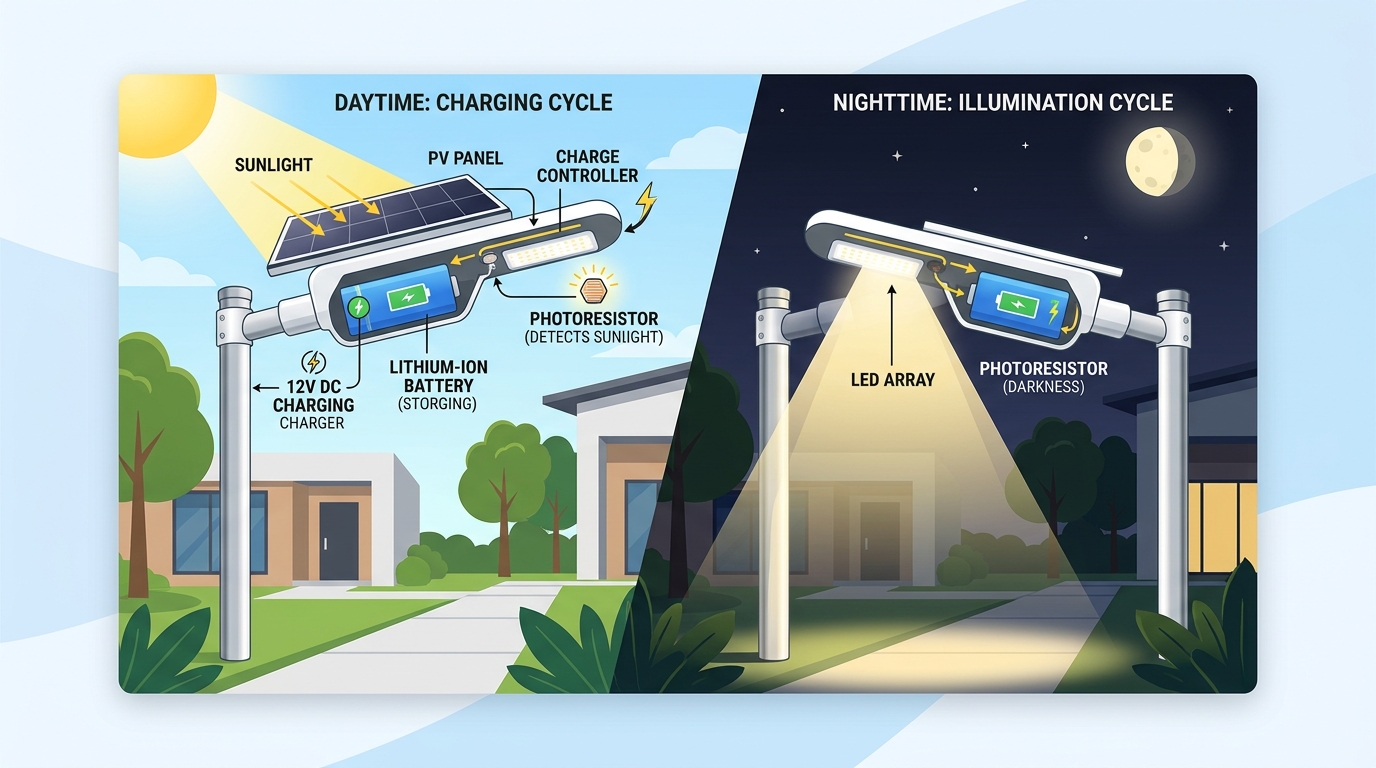 How solar lights for home work — diagram of photovoltaic panel charging a battery during the day and powering LEDs at night
Types of Solar Lights for Every Area of Your Home
Not all solar fixtures do the same job. Picking the right type depends entirely on where you need light and what that light needs to accomplish — ambiance, safety, navigation, or curb appeal. Here’s how the main categories break down.
Solar Garden Lights
These are the short, stake-mounted fixtures you push directly into soil along flower beds or walkways. Most output between 5 and 20 lumens — enough to create a soft glow without washing out your landscaping. They’re decorative first, functional second.
Solar Pole Lights
Standing 5 to 8 feet tall, pole-mounted units mimic traditional lamp posts and throw light across a wider radius. Driveways, long pathways, and front yard borders benefit most. Expect 100–400 lumens from a quality model, which is comparable to a dim incandescent bulb but more than adequate for wayfinding after dark.
Wall-Mounted Security Lights
These bolt directly to exterior walls, garages, or fence posts. Motion-activated models with PIR sensors can blast 800+ lumens when triggered, then drop back to a dim standby mode. For anyone choosing solar lights for home security, this category delivers the most practical value per dollar.
String Lights for Patios
Solar-powered string lights run 20 to 30 feet on a single panel and create warm ambient lighting for decks, pergolas, and outdoor dining areas. They won’t illuminate a parking lot, but that’s not the point. According to the , LED-based options like these consume a fraction of the energy traditional patio lighting would.
Solar Spotlights
Accent spotlights sit at ground level and aim upward — perfect for highlighting trees, architectural features, or flagpoles. Output typically ranges from 200 to 600 lumens with adjustable heads that let you dial in the exact angle. They’re the most targeted option in the lineup.
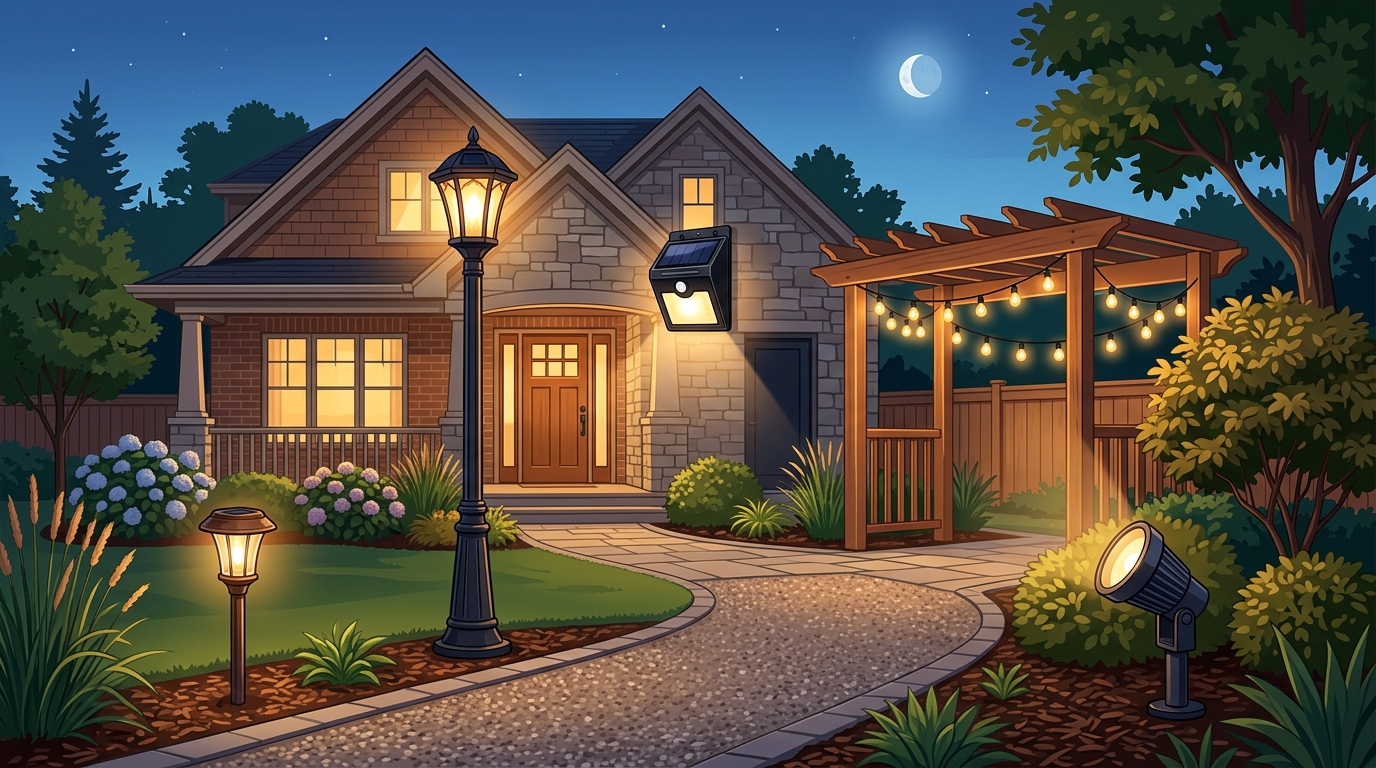 Five types of solar lights for home use including garden stakes, pole lamps, wall-mounted security lights, string lights, and spotlights
What Makes Solar Garden Lights Outdoor Waterproof and Long-Lasting
“Waterproof” gets thrown around loosely. The real measure is the IP (Ingress Protection) rating — a two-digit code defined by the . The first digit rates dust resistance (0–6), the second rates water resistance (0–9). IP65 means fully dust-tight and protected against low-pressure water jets from any direction. IP67 adds the ability to survive temporary submersion up to 1 meter for 30 minutes. For solar lights for home use in gardens, IP65 handles rain and sprinklers just fine, but if your yard floods or you live in a monsoon-prone region, IP67 is the safer bet.
Housing material matters more than most buyers realize. Stainless steel 304-grade resists corrosion for years. ABS plastic is lighter and cheaper, but it yellows and becomes brittle under prolonged UV exposure — sometimes within two seasons. A UV-stabilized polycarbonate lens sits somewhere in between: tough, clear, and resistant to sun damage without the weight or cost of metal.
Then there’s the battery. Cheap NiMH cells lose roughly 20% capacity per year. Lithium iron phosphate (LiFePO4) batteries hold up dramatically better, often retaining 80% capacity after 2,000 charge cycles. That’s roughly 5–6 years of daily use. When choosing outdoor solar garden lights, flip the box over and check the battery chemistry — it tells you more about longevity than any marketing claim on the front.
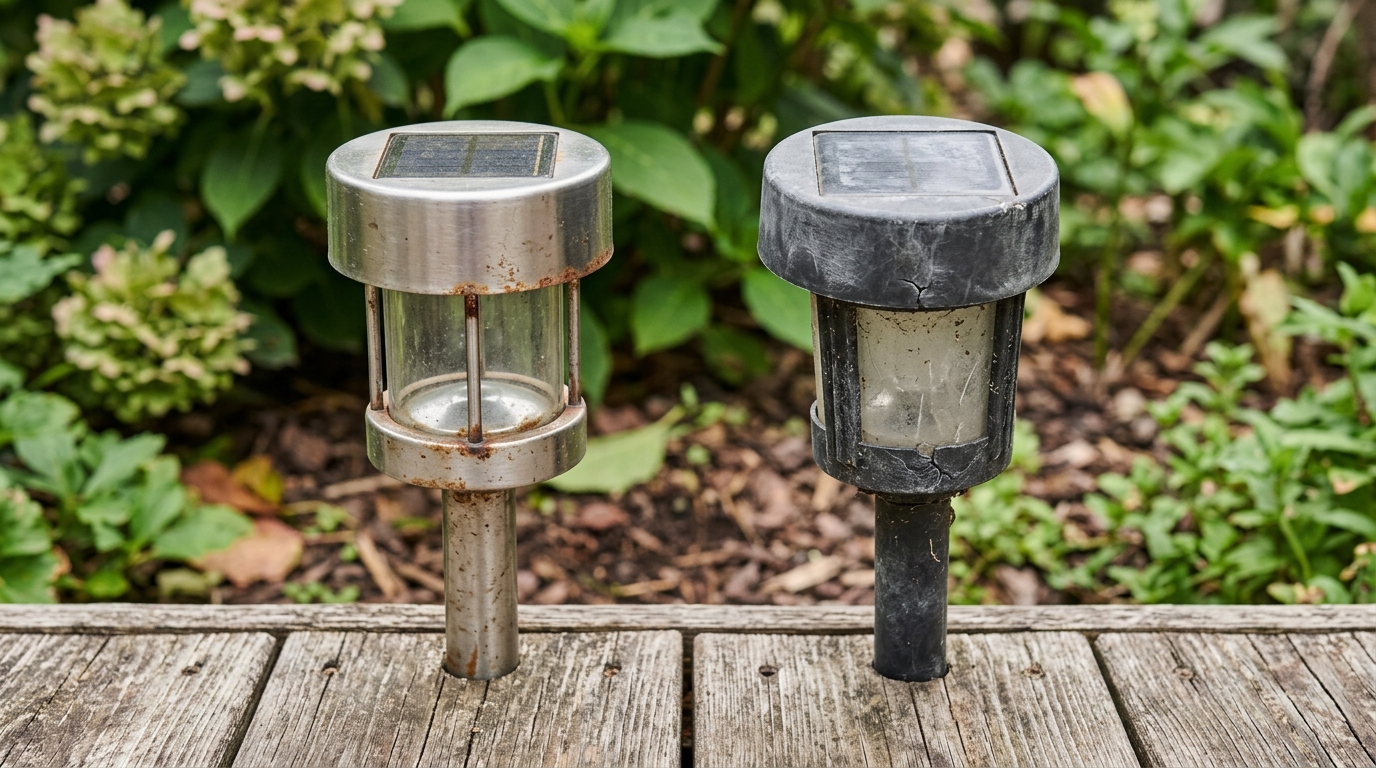 Stainless steel vs plastic solar garden light housing durability comparison after outdoor weathering
Solar Pole Lights vs. Ground-Level Options and When to Choose Each
Height changes everything. A solar stake light sitting 6 inches off the ground throws a soft glow across a flower bed — pleasant, but limited. Mount that same lumen output on a 5-foot pole, and the light cone widens dramatically, covering 3–4 times the ground area. That’s basic physics, not marketing.
Pole-mounted solar lights for home use typically output between 100 and 400 lumens, while ground-level stake lights hover around 10–30 lumens. The difference matters most along driveways, property borders, and walkways where you need functional visibility after dark — not just decorative ambiance. A 200-lumen pole light at 48 inches can illuminate a 12-foot radius, enough to safely navigate a gravel path or spot a curb edge.
There’s a charging advantage too. Pole-mounted panels sit above fence shadows, garden furniture, and low shrubs that block direct sunlight from reaching ground-level units. According to the , even partial shading on a PV cell can reduce output by 50% or more. Elevated panels dodge that problem entirely.
When Ground-Level Wins
Stake lights still earn their place. They’re ideal for lining garden borders, marking planting beds, or adding subtle accent lighting beneath hedges. Installation takes seconds — push them into soil and walk away. No anchoring, no concrete, no tools. For pure aesthetics at low cost, they’re hard to beat.
When Poles Are the Better Call
Choose pole lights when safety or security drives the decision. Driveway edges, long walkways, and unfenced property lines all benefit from elevated, wider-reaching illumination. Most pole designs use a ground spike plus a stabilizing collar, and some require a small concrete footing for windy regions. Budget roughly $30–$80 per unit for a quality pole light versus $5–$15 per stake light.
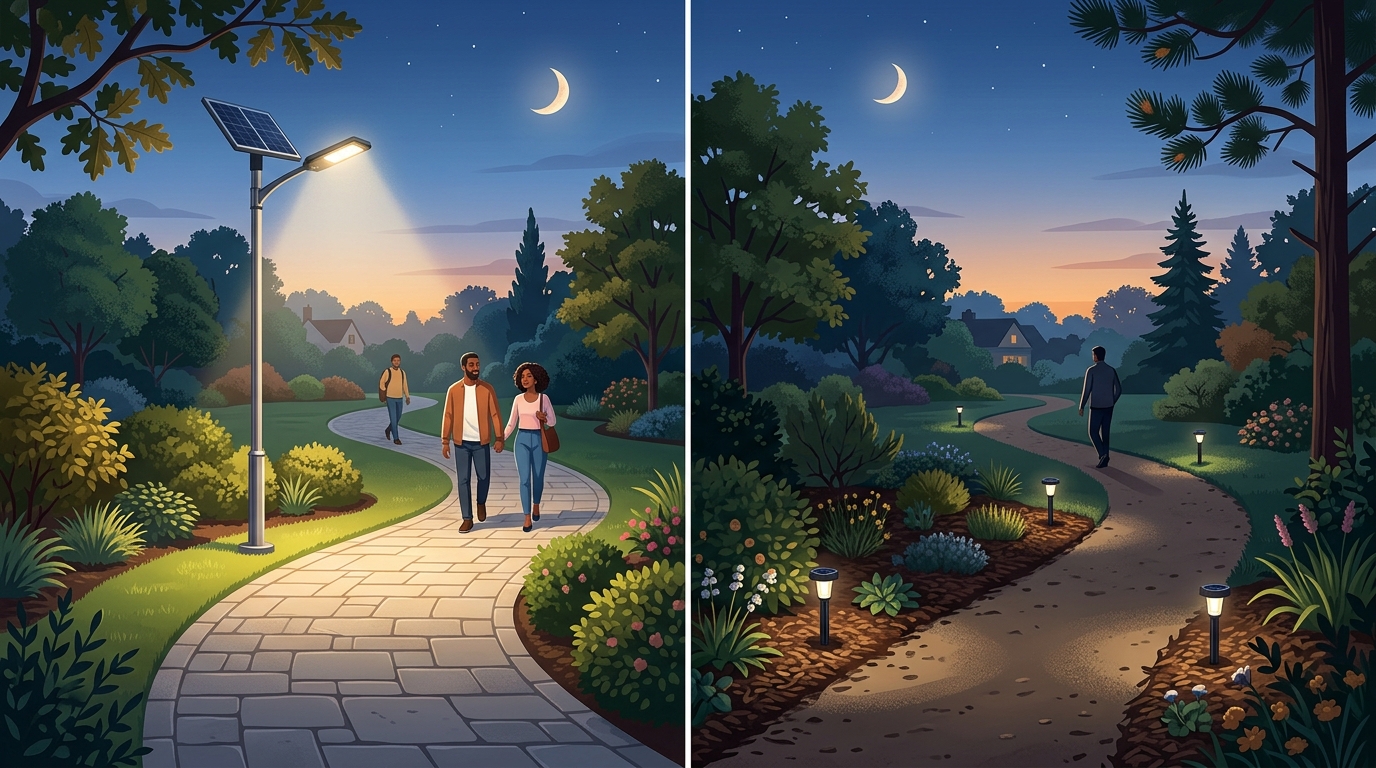 Solar pole light versus ground-level stake light comparison showing illumination coverage differences along a home walkway
Key Features to Look for in LED Solar Lights Outdoor Waterproof
Spec sheets can be overwhelming. Here’s how to cut through the noise and focus on numbers that actually predict real-world performance when shopping for solar lights for home use.
Lumen Output — The Brightness Benchmark
Lumens measure visible light output, not wattage. For pathway accents, 10–30 lumens works fine. Security floodlights need 300–1,000+ lumens to be genuinely useful. A fixture claiming “super bright” without listing a lumen count? Skip it. The recommends using lumens — not watts — as your primary brightness comparison metric, and that advice applies doubly to solar products where wattage figures can be misleading.
Battery Capacity and Run Time
Look for lithium-ion or LiFePO4 batteries rated at 2,000 mAh or higher for lights you expect to last a full night. Cheap units with 600–800 mAh cells die by midnight. A quality fixture should deliver 8–12 hours on a full charge, though motion-sensor modes stretch that considerably since the LED only fires at full power during activation.
Solar Panel Efficiency and Lighting Modes
Monocrystalline panels convert roughly 20–22% of sunlight into electricity. Polycrystalline panels sit closer to 15–17%. That gap matters in partial shade. For modes, prioritize units offering at least three options: dusk-to-dawn continuous, motion-activated with adjustable sensitivity, and a dim standby that brightens on detection. Manual on/off is a bonus, not a necessity.
Color Temperature
Measured in Kelvin. Warm white (2,700–3,000K) creates an inviting ambiance for patios and gardens. Cool white (5,000–6,500K) maximizes visibility for driveways and security zones. Some premium solar lights for home applications now offer tunable color temperature — genuinely useful if one fixture serves dual purposes.
Installation Tips and Placement Mistakes That Kill Solar Light Performance
Great hardware means nothing with bad placement. The single biggest performance killer for solar lights for home use is insufficient direct sunlight on the panel — and most people underestimate how little shade it takes to cause problems. Even 2–3 hours of partial shadow from a tree canopy can cut charging efficiency by 40–60%, according to data from the .
Placement Rules That Actually Matter
Aim for a minimum of 6 hours of unobstructed sunlight. South-facing positions work best in the Northern Hemisphere — north-facing walls are a dead zone. Check the spot at 10 AM, noon, and 3 PM before committing. If shadows creep in during any of those windows, pick a different location.
Spacing matters too. Path lights placed 6–8 feet apart create even illumination without dark gaps. Flood or security lights mounted at 8–10 feet high cover roughly 30–40 feet of ground, depending on lumen output. Overlapping coverage wastes units.
Seasonal Adjustments and Maintenance
Sun angle shifts dramatically between June and December — up to 47° of arc depending on your latitude. Adjustable-panel models let you tilt toward the lower winter sun, recovering 15–25% of lost charge. Fixed panels lose that flexibility entirely.
Clean panels every 4–6 weeks with a damp cloth. Dust, pollen, and bird droppings create a film that blocks UV absorption. Replace NiMH or lithium batteries every 18–24 months; degraded cells hold less charge and dim output noticeably before they fail completely.
Frequently Asked Questions About Solar Lights for Home
How long do they actually last?
Most LED modules survive 25,000–50,000 hours — that’s roughly 10+ years of nightly use. The battery is the weak link. Expect NiMH cells to degrade noticeably after 1.5–2 years, while lithium-ion packs hold strong for 3–5 years before capacity drops below 70%. Replacing a battery costs $5–$15, so the fixture itself rarely dies first.
Do they work in cloudy weather or winter?
Yes, but output drops. Overcast skies cut charging efficiency by 30–50%, which means shorter run times at night. In northern latitudes during December, some units only manage 3–4 hours of dim light instead of the rated 8–10. Positioning panels at a slight southward tilt helps squeeze out extra charge during short winter days.
How bright are they compared to wired lights?
A typical solar path light produces 10–30 lumens. Wired low-voltage path lights hit 100–200 lumens easily. The gap narrows with premium solar floodlights — some reach 1,500+ lumens — but they need large panels and hefty batteries. For accent and wayfinding, solar is plenty. For security-grade brightness, check the lumen spec carefully.
Are they worth the investment?
A 6-pack of decent solar path lights runs $30–$60 and costs zero to operate. According to the , outdoor lighting can account for a meaningful slice of residential electricity use. Solar lights for home eliminate that line item entirely. Payback is fast — often under one season.
My lights stopped working. Now what?
-
Clean the panel with a damp cloth; dust and pollen film blocks more light than you’d guess.
-
Check for a pull-tab or on/off switch — some ship in “off” mode.
-
Swap the rechargeable battery; a dead cell is the #1 cause of failure after year two.
-