



Blog
Street Light Pole Height Guide: Standard Sizes for Residential, Highway & Parking Lighting

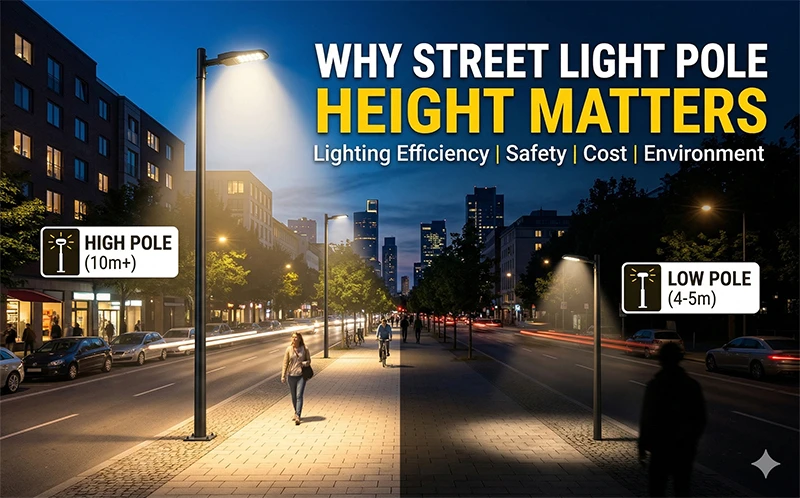
When planning a municipal, commercial, or infrastructure lighting project, one key question always comes up:
How tall should a street light pole be?
Choosing the right pole height is critical. It directly affects lighting performance, public safety, energy efficiency, and project compliance. Whether you are working on residential roads, highways, or parking lots, understanding standard street light pole heights and local regulations will help you avoid costly mistakes.
In this guide, we’ll break down everything you need to know.
Why Street Light Pole Height Matters
A properly selected pole height helps you:
-
Improve visibility for drivers and pedestrians
-
Ensure uniform light distribution
-
Reduce dark spots and glare
-
Enhance public safety and security
-
Maintain aesthetic appeal
-
Comply with local regulations
Different environments require different pole heights. Below are the most common standards used worldwide.
1. Residential Street Light Pole Height
-
Typical height: 8–20 feet (2.5–6 meters)
Residential lighting focuses on comfort and safety.
These poles are designed to:
-
Light sidewalks and small roads
-
Minimize light spilling into homes
-
Create a warm, community-friendly atmosphere
In many cities, decorative poles are also used to improve neighborhood aesthetics.
2. Highway Street Light Pole Height
-
Typical height: 40–100 feet (12–30 meters)
-
Average height: Around 50 feet (15 meters)
Highways require powerful, wide-area lighting.
Taller poles are necessary to:
-
Cover multiple lanes
-
Provide long-distance visibility
-
Improve driver reaction time at high speeds
For large interchanges or expressways, even taller poles may be required.
3. Parking Lot Light Pole Height
-
Typical height: 15–30 feet (4.5–9 meters)
Parking lot lighting is mainly focused on security and visibility.
These poles:
-
Reduce crime risks
-
Improve safety for vehicles and pedestrians
-
Can support single or multiple luminaires
Many local codes require minimum illumination levels, so proper height selection is essential.
Street Light Pole Height Regulations
Before installing any lighting system, you must understand local regulations.
Common Height Limits
-
Residential areas: Up to 20 feet
-
Commercial areas: Up to 30 feet
-
Highways: Determined by transportation authorities
Key Requirements
✔ Permits Many regions require permits for poles above a certain height.
✔ Zoning Laws Local zoning rules control height to:
-
Prevent light pollution
-
Maintain uniform urban design
-
Protect visibility
✔ Safety Standards Standards such as the AASHTO Roadside Design Guide define:
-
Minimum clearance heights
-
Setback distances
-
Structural safety requirements
👉 Ignoring these rules can lead to fines or forced removal.
How to Measure Street Light Pole Height
Accurate measurement is essential for compliance and installation.
1. Measure from Ground Level
Start at the base of the pole and measure to the top of the pole structure.
👉 Do NOT include the light fixture unless specified.
2. Consider Uneven Ground
If the ground is sloped:
-
Measure both high and low points
-
Follow local rules (average or lowest point)
3. Exclude Underground Depth
Only measure the visible height above ground.
The buried foundation is NOT included.
Maximum Legal Height for Street Light Poles
Here’s a quick reference:
| Application | Typical Height Range |
|---|---|
| Residential Roads | 8–20 ft (2.5–6 m) |
| Commercial / Parking | 20–30 ft (6–9 m) |
| Highways | 40–100+ ft (12–30 m) |
How to Choose the Right Pole Height
When selecting a street light pole, consider:
-
Application type (residential, highway, parking)
-
Road width and layout
-
Required brightness (lux level)
-
Pole spacing
-
Local regulations
-
Wind and environmental conditions
For a complete guide, check our Street Light Pole Height Guide.
A wrong choice can lead to:
-
Poor lighting performance
-
Higher costs
-
Compliance issues
Pro Tip for Solar Street Light Projects
For solar street lights, pole height becomes even more important because:
-
Battery capacity is limited
-
Light distribution must be optimized
-
Higher poles may require stronger systems
👉 In many solar projects (especially in Africa and Southeast Asia), the most common range is:
6–9 meters (20–30 feet)
This balances:
-
Coverage
-
Cost
-
Energy efficiency
Conclusion
Street light pole height is one of the most critical factors in any lighting project.
By understanding:
-
Standard height ranges
-
Application requirements
-
Local regulations
You can design a system that is safe, efficient, and fully compliant
One thought on “Street Light Pole Height Guide: Standard Sizes for Residential, Highway & Parking Lighting”